


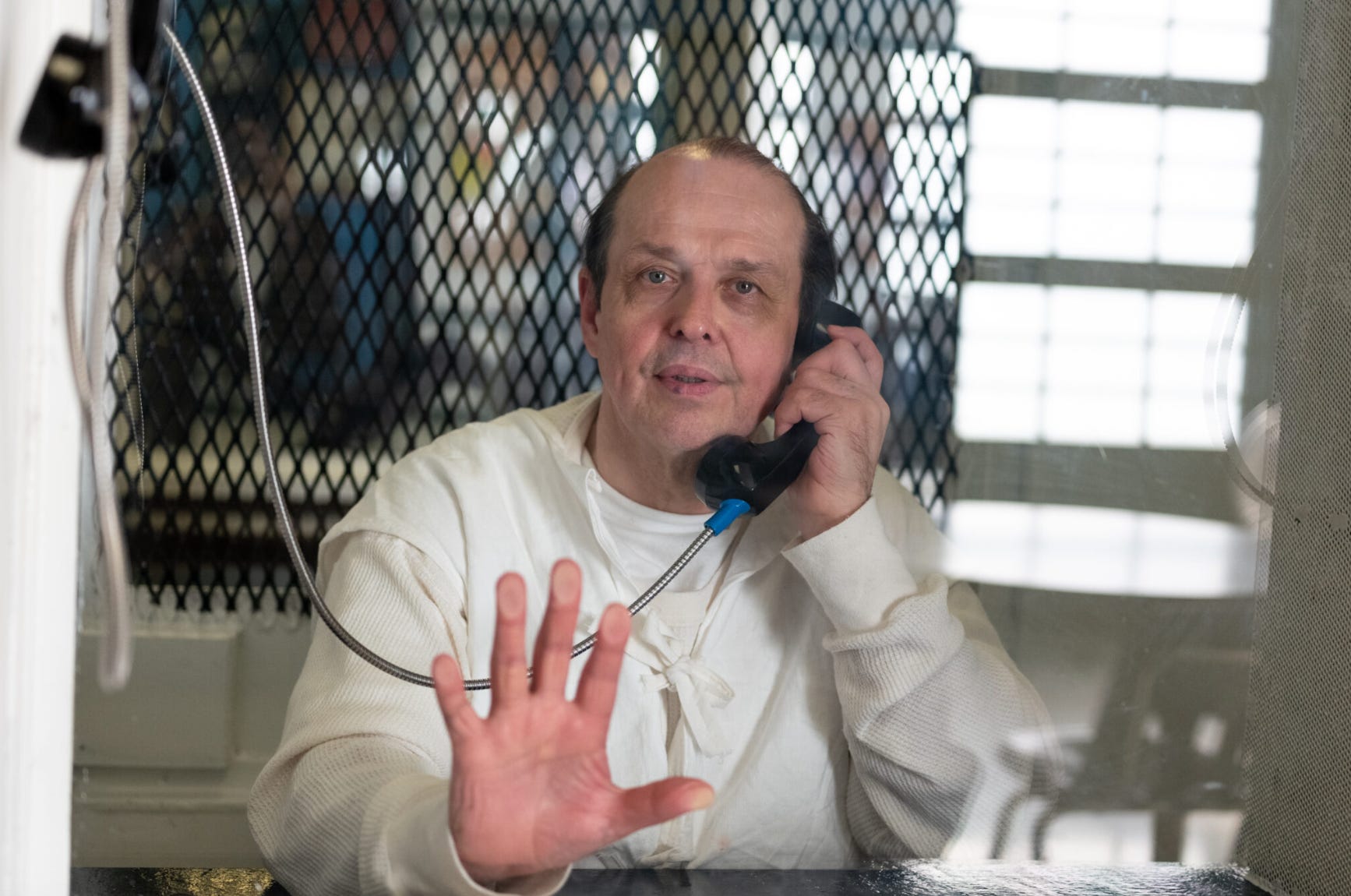
Last October, the Texas Supreme Court issued a temporary stay of execution for Robert Roberson, a clearly innocent autistic man who has been in solitary confinement on death row for 22 years after being convicted of the murder of his two-year-old daughter Nikki.
In 2003, Roberson was found guilty of having shaken the chronically ill toddler to death, causing her to die from “Shaken Baby Syndrome.” However, we now know a lot more about that diagnosis than we did back then, and it’s now fairly evident that there is no way he could be found guilty beyond a reasonable doubt.
Unfortunately, Attorney General Ken Paxton managed to convince another Texas judge, Judge Austin Reeve Jackson, to let him kill Roberson this October 16.
Just so we’re clear — I am not saying that anyone should go around shaking babies. That is a poor idea! It is child abuse.
What I am saying is that we know now that the triad of retinal hemorrhages, subdural hematoma, and encephalopathy once used to definitively diagnose “Shaken Baby Syndrome” is no longer considered to be pathognomonic — even by many of those who still generally believe in it. There are other things that can cause these symptoms as well, and in this case, Nikki had multiple other health issues and reasons to consider a differential diagnosis.
A differential diagnosis would have required considering, for instance, the facts that, days after her birth, Nikki had the first of many infections that proved resistant to multiple antibiotics, including chronic ear infections that persisted even after she had had tubes surgically implanted. She also had a history of unexplained “breathing apnea” that caused her to suddenly stop breathing, collapse, and turn blue.
The week before her death, Nikki had been vomiting, coughing, and having diarrhea. When her symptoms didn’t stop after five days, Mr. Roberson and his mother took Nikki to their local emergency room in Palestine, Texas, where a doctor prescribed Phenergan, a potent drug that now carries an FDA black-box warning against being prescribed to children of Nikki’s age and with her condition. Nikki was sent home. Her condition did not improve and, that night, her temperature rose to 103.1 degrees Fahrenheit. The next morning, Mr. Roberson took her to a pediatrician, who sent the toddler home, despite a fever of 104.5 degrees Fahrenheit, and prescribed more Phenergan, in cough syrup with codeine — an opioid now restricted for children under 18 by the FDA due to its risks of causing breathing difficulties and death. Nikki’s toxicology report showed lethal levels of the respiratory-suppressing Phenergan still in her system.
Another reason Roberson was convicted was because the doctors treating Nikki didn’t feel that he was sufficiently emotional when told that Nikki might die and interpreted that as guilt. However, as mentioned earlier, Roberson has autism, a condition famously known to impact the affect of some people. That aside, even neurotypical people have been known to react in strange ways to devastating news or emergencies.
The especially frustrating thing here is that Texas actually has a law on the books meant to allow those convicted of crimes appeal their cases if the science used to convict them has changed or advanced in a way that could have changed the outcome of their cases. That is a great law, and good on Texas for being the first to have it (and to California, Connecticut, Michigan, Nevada, and Wyoming for enacting similar laws thereafter). Credit where credit is due. Unfortunately, the courts keep rejecting challenges based on this law from Roberson and others convicted based on science that has since been discredited. This is partly because, although in Roberson’s initial trial, it was very clearly presented as a shaken baby case, the doctor who treated Nikki said in 2016 that it was actually blunt force trauma and that had been her story all along.
“Everyone who has taken the time to look at the evidence of Robert Roberson’s innocence—including the lead detective, one of the jurors, a range of highly qualified experts, and a bipartisan group of Texas lawmakers—has reached the same conclusion: Nikki’s death was a terrible tragedy,” Gretchen Sween, Roberson’s attorney said. “Robert did not kill her. There was no crime.”
No one is asking that he be released immediately. They are simply asking for a new trial. If Paxton is so confident in the case, he should have no issue with that, should he?
Thankfully, there is still some time before October. Not a lot of time, but some. Hopefully enough. But this is the problem with the death penalty. Incarceration is bad enough, but at least there’s an opportunity (sometimes) to correct things. At least there’s a chance. Once someone dies, there’s nothing you can do to reverse that. As long as we have the death penalty, some innocent people will die.
PREVIOUSLY ON WONKETTE!


"The next morning, Mr. Roberson took her to a pediatrician, who sent the toddler home, despite a fever of 104.5 degrees Fahrenheit, and prescribed more Phenergan, in cough syrup with codeine — an opioid now restricted for children under 18 by the FDA due to its risks of causing breathing difficulties and death."
[...]
"Another reason Roberson was convicted was because the doctors treating Nikki didn’t feel that he was sufficiently emotional when told that Nikki might die and interpreted that as guilt."
Call me a cynic, because I am one, to the bone. But it kinda sounds like there might be some (read: a LOT) of ass-covering on the part of the doctors here.
NOBODY acts like they're "supposed to" in moments of high trauma. And the ones who do are accused of "faking". I have never seen a police report where someone "acted appropriately". They always, ALWAYS note something odd. Even good officers. "She cried excessively", "he had a hard time speaking", "he wouldn't look in my eyes", "she claimed she forgot about..."
People are people and a constellation of a million things at any moment and that's normal. Throw in trauma and nobody knows what's right.
The last time I got pulled over I knew the officer, I knew the law, I knew what was going on, and I still got so flustered--FOR A TRAFFIC TICKET--that I accidently lied about my age by an outrageous amount. Luckily, the officer was like, "seriously?" and I got my shit together, but multiply that by a thousand.