


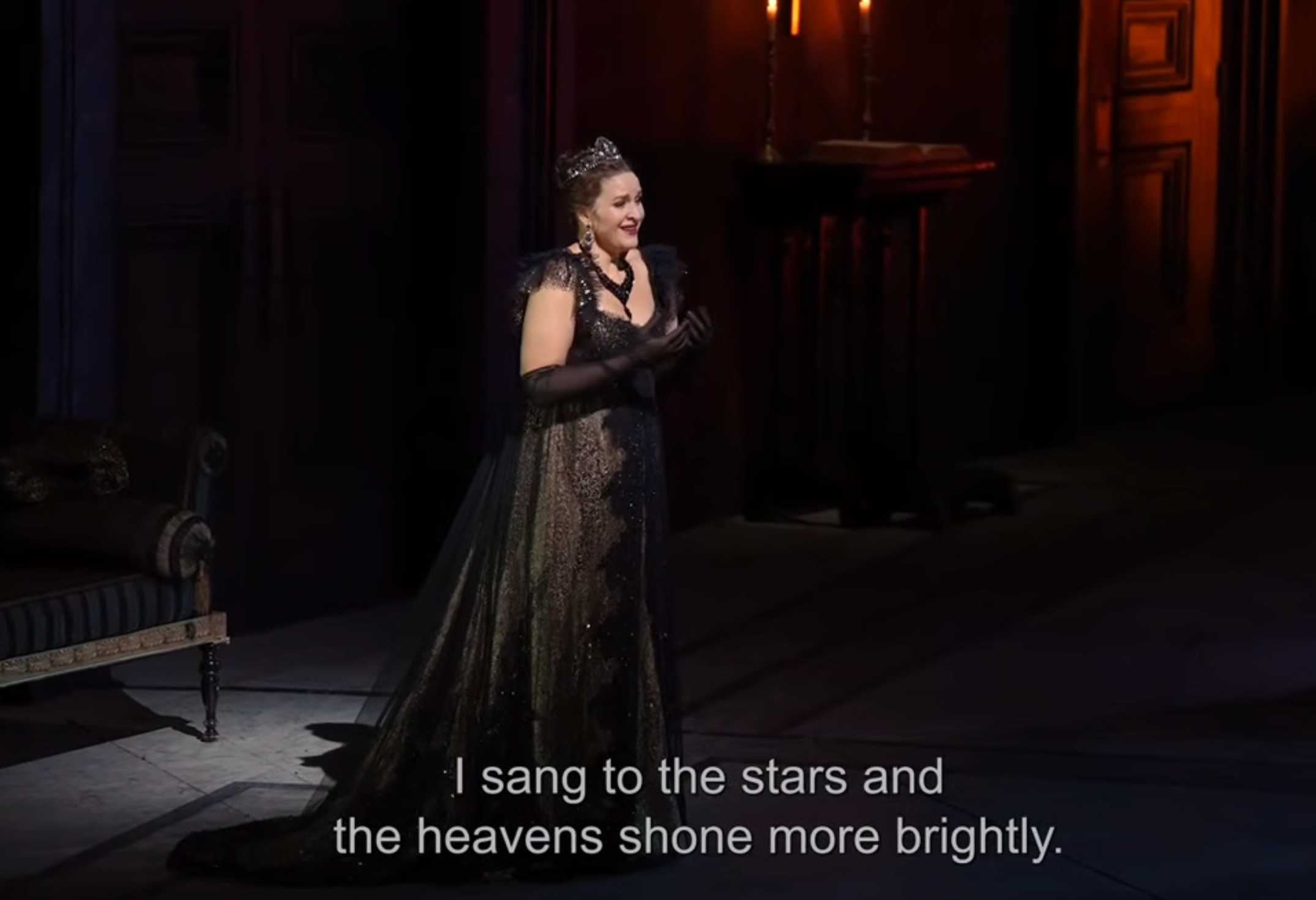
You have probably heard by now that Timothée Chalamet said some ignorant things about opera and ballet last week.
“I admire people — and I’ve done it myself — who go on a talk show and go, ‘Hey, we gotta keep movie theaters alive. You know, we gotta keep this genre alive,’” he told fellow actor Matthew McConaughey in a town hall conversation hosted by CNN and Variety. “And another part of me feels like, if people want to see it, like Barbie, like Oppenheimer, they’re going to go see it and go out of their way to be loud and proud about it.”
He then added, “I don’t want to be working in ballet or opera, or you know, things where it’s like, ‘Hey, keep this thing alive,’ even though it’s like, no one cares about this anymore.”
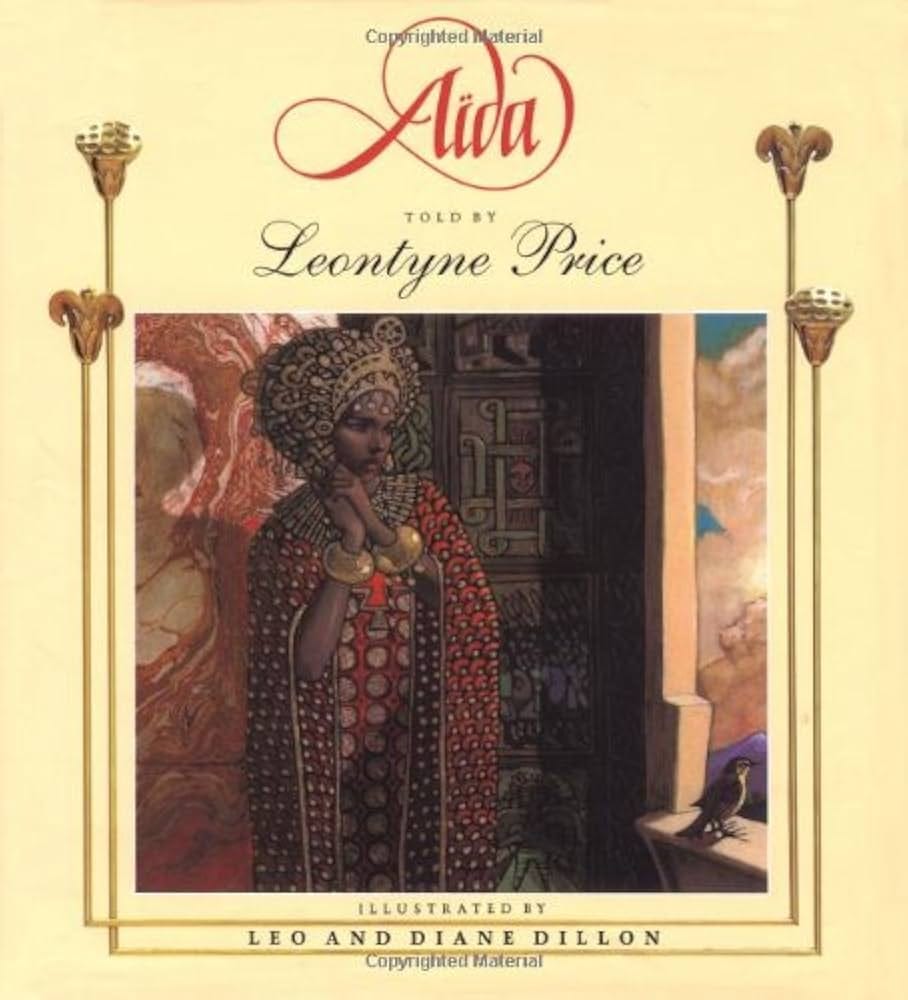
Regular readers of this site likely know that I care very, very much about opera. I am a member of Chicago’s Lyric Young Professionals and I make it a point to see every production I can every year. It’s something I’ve loved since childhood — one of the first CDs (technically two CDs) I ever owned was a recording of Leontyne Price in Verdi’s Aida, which my mom got me for Christmas along with a copy of the children’s book version of the story written by Price.
Incidentally, Vanity Fair’s defense of Chalamet’s comments begins “Did you have a marvelous time at Verdi’s Aida this weekend?”
I didn’t. I saw it last year and I did have a marvelous time, thank you very much. But last month I saw Salomé and Cosi Fan Tutti in one weekend, which I think makes up for it. But I get it. Not a lot of people are into opera the way I am into opera — it’s a significant part of both my artistic life and my social life and honestly it’s my whole heart. But that doesn’t mean we are all desperately scrambling to save something that “people don’t care about.”
When you go to the opera, when you go to the ballet, you are seeing people with an incredible amount of skill and talent do something that only a very small number of people are able to do. People who may never be famous, never be fabulously wealthy (a corps de ballet dancer in New York City makes about $40K to $70K a year), who dedicate their whole lives to being amazing at an art form just for the sheer love of it. That’s how much people care about it.
In the Vanity Fair defense, writer Chris Murphy argues:
Once upon a time, opera and ballet were indeed popular entertainment. But it’s undeniably true that in contemporary American culture, they’re both propped up by wealthy patrons and donors, rather than the general public. (And certainly not the federal government, which has been slashing budgets and arts programs left and right.) One viral TikTok highlighted how ballet and opera tickets are expensive—while movie tickets are cheap. In the poster’s view, this is a good thing. “The average person can go see your fucking movie,” said @arbacn.net. “But not the average person can go see the New York City Ballet’s ballet performance or a beautiful opera.”
Most of the time, tickets to the opera and the ballet are actually far less expensive than going to see a popular singer or band. There are also a number of affordable options for seeing these productions. I belong to Lyric Young Professionals and pay $100 a year for $40 tickets to every production, along with happy hours and other social events. (If you are under 45 and in Chicago, check it out! We are all super nice!) Most of my friends also belong to the Overture Council, which is a similar thing but for the Chicago Symphony Orchestra. There are options and groups working to keep the younger generations interested in these art forms and to make them feel a part of things, and I think that’s awesome.
There also are companies like the the Chicago City Opera that put on very affordable productions. I saw their production of Carmen in a cemetery last summer and it was packed full and an absolute jam. There are other affordable (and even free!) options in most cities.
One of the things you will notice about the Lyric in Chicago is that it does not have the traditional “U” of opera boxes around the seating area. This was done on purpose, as, from its very beginning, opera in Chicago was meant to be accessible to all. They didn’t want a place for the elite to “see and be seen,” they wanted a place where anyone could go and enjoy the most beautiful music in the world. And there really isn’t a bad seat there (though if you’re all the way in the back, maybe get some opera glasses at the coat check — or just get them anyway because of how you’ve always wanted to use opera glasses).
The first home of the Chicago Opera was the Auditorium Theater, built in 1885 after the Chicago fire destroyed the city’s first opera house. The plan, from the beginning, was inclusivity and making the performing arts available to everyone regardless of class.
From The Auditorium Theater site:
Since the theatre’s beginning, it has aimed to create an inclusive space, and this principle is reflected in the arrangement of the Auditorium’s seating and layout of the theatre. Traditionally, box seats occupied the best space in theaters around the world such as the Metropolitan Opera House. Instead, the Auditorium adopted a seating model that would be less class divided and thus the theatre was originally designed without box seats to remove the privileged seats that were normally reserved for the wealthy (the box seats were eventually added to the blueprints before the theatre’s opening after receiving several requests). This intentional design encouraged equality amongst Chicagoans by giving the middle and working class the same rich and elegant experience that would otherwise be only accessible to those who could afford it. Additionally, thanks to the incredible interior design by Dankmar Adler and Louis Sullivan, the theatre is known to have near-perfect acoustics and be visually pleasing in every seat.
It’s true. There really isn’t a bad seat in the house there either. I just went there to go see Patti Lupone (you may die of jealousy now) and the sound was incredible.
The idea that some art requires donations to “survive” doesn’t mean it isn’t worth doing. Hell, this site require donations to survive, and you love us!
Throughout human history, most art has been funded by donations, solicited and otherwise. How do you think we got the Mona Lisa? How did we get all of these operas and ballets in the first place?
While I don’t like the idea of separating high art and low art (and absolutely will go on about how opera and Shakespeare plays were originally for the masses), there is and always has been a difference in how various forms of art perpetuate themselves. Opera, ballet, visual art, classical music, live theater often don’t support themselves through commercial advertisements, but through ticket sales and donations from people who love those things and want them to be around for others who love them, and that is just as valid as an art form that supports itself through product placements for laundry detergent and Subarus.
The idea that the only art that matters is the art that is currently part of the cultural zeitgeist is a deeply depressing one. One of the best things about all the access we have now to music, to movies, to television shows is that we get to create our own zeitgeist in a way. We aren’t stuck only with whatever is popular at the moment.
At the same time, community is incredibly important, too. This is one reason, surely, why people do advocate for seeing movies in theaters (apart from wanting to make money from them). There is something to being around other people who enjoy the same things you do that you just can’t get at home.
The fact is, it’s getting increasingly expensive to go out and do anything these days. Drinks are more expensive. It’s kind of funny that we talk about how “kids today” don’t go out like we did, but we had $1 PBRs or 2 for $5 fuzzy navels depending on which crowd you ran with, and they have $20 cocktails. Hell, some places they have $20 mocktails. Even my regular dive bar now charges $5 for a well drink! Chicken wings are somehow now more expensive than oysters. Concert tickets are expensive — I can afford opera, but I couldn’t afford Rilo Kiley. Sports tickets, I am told, are also quite pricey these days. Movie ticket prices, too, are crazy expensive compared to the “nothing” we pay to watch them at home. They can’t hang out at coffee places because half of the coffee places close at 3 p.m. now.
The fact is, at this point, we do need to conscientiously “keep things alive.” Because if we keep going the way we’re going, there’s not going to be anything left for us but lying in bed and binge-watching Law and Order SVU. It’s not just opera, it’s not just ballet, it’s human contact and community in general. I truly believe that a very big part of the reason we are seeing so much extremism and hate these days is because of the lack of in-person community building and socializing. It’s a whole lot easier to develop crazy ass ideas about the world and the people in it when you are not of it, which is why we see so many these days gravitating towards an incel-like viewpoint. These things take effort, both financially and personally, but we’re hurting without them.
I believe in keeping opera and ballet alive, not because they are a part of the current cultural zeitgeist, but because the people who come after me deserve to see them as well. They deserve the opportunity to see that side of humanity, to see people doing beautiful, incredible things with their voices and their bodies. There’s so much ugliness in the world now and if keeping beautiful things in it is a fight, it’s one hell a worthy cause.
PREVIOUSLY ON WONKETTE!


My intro to opera, like many in my generation (x) is from Bugs Bunny Cartoons. I know it's "Ride of the Valkyries" and part of the Ring of Nibuleng (now) instead of "Kill the Wabbit"
Seems Timmy is too young for that.
Brava!
It’s really depressing when you hear people just dump on art and performance. I was raised in an artistic family, and the idea was that it was important to experience all of it that you could, even if a particular thing wasn’t your “thing “. It makes you a more complete person.
When I was younger I joined the DC young professionals thing for the symphony—like Robyn mentions. One cool thing was that we regularly got to go to rehearsals (I like most rehearsals better than the finished production usually) for free and they were relaxed and the conductor was so nice and would interact with us and tell us why this was important, or how he wanted different things done and so on.
I wasn’t a big classical music person but it was so fascinating I was hooked.