


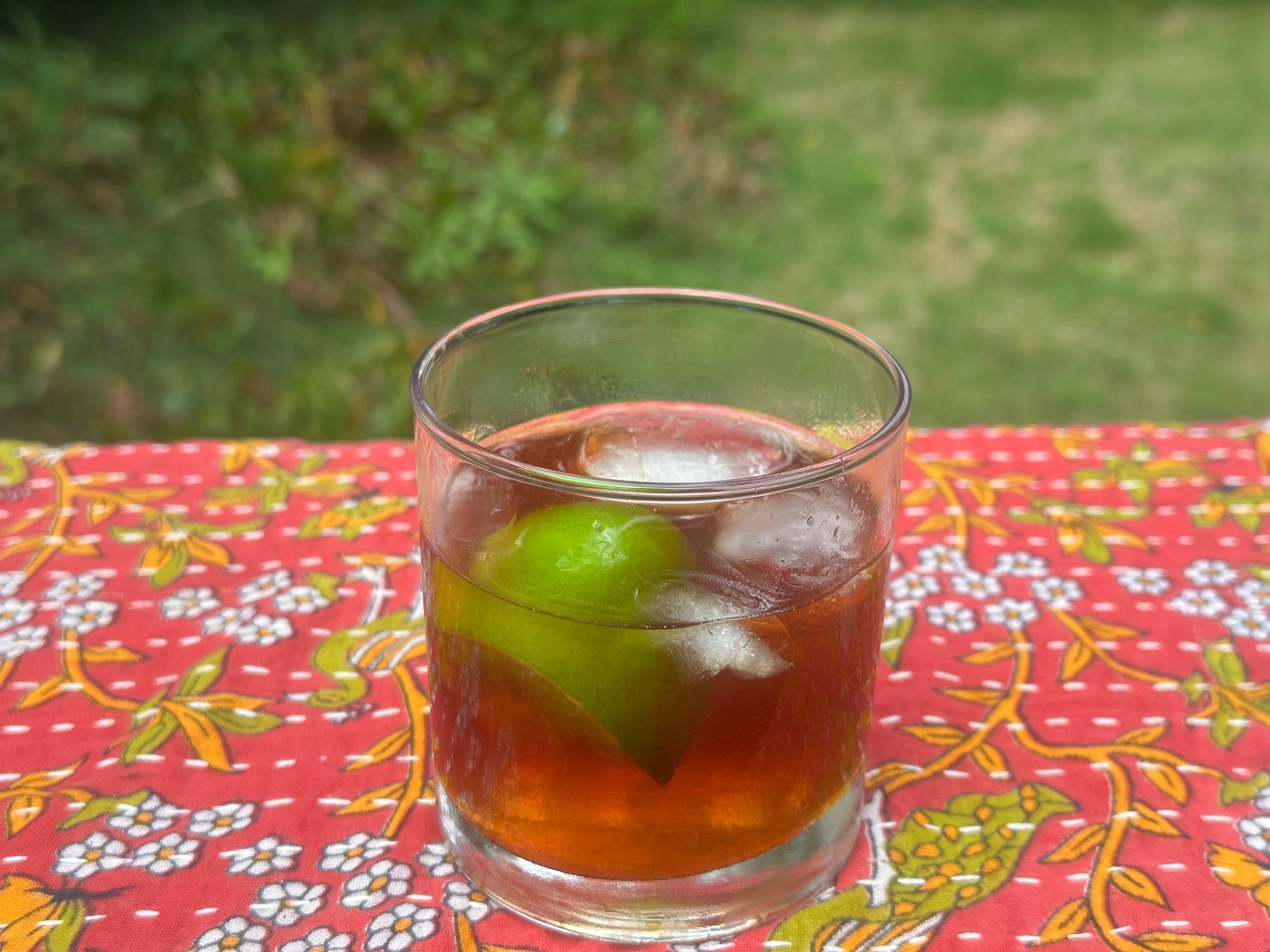
Greetings, Wonketeers! I’m Hooper, your bartender. I’ve got a weekend off, so I’m dressing up like a pirate and having a blast with my family at the Renfaire. Let’s make a take on a classic pirate drink to celebrate. Time to make some Bumboo. Here’s the recipe.
Bumboo
3 oz Hamilton 86 rum
¾ oz fresh lime juice
1 oz Bumboo syrup
Shake all ingredients and pour over ice into a pirate mug (or a rocks glass). Drink up, me hearties.
Bumboo Syrup
1 cup coconut water
2 cups demerara sugar
2 teaspoons molasses
4 peppercorns
1 cinnamon stick
3 allspice berries
¼ t freshly grated nutmeg
Simmer all ingredients in a saucepan over low heat for 30 minutes. Strain well and pour into a sealable bottle. Will keep indefinitely in the fridge.
I will freely confess to being inspired for this recipe by Greg from How To Drink, who is currently doing a whole month’s worth of episodes on pirate booze. As Greg rightly points out, you can’t call a drink this ancient a “cocktail”; it predates most of the things that we use to define a cocktail as such, including ice. As such, Greg is pretty much going on vibes and adding ingredients to these drinks as the spirit moves him. I decided to cocktailify his efforts and turn his Bumboo recipe into a more measured affair.
Bumboo is a historically documented rum drink; it’s mentioned in the trial of Captain Kidd, among other places. From what we can gather, it’s essentially grog — rum, water, and lime — with some nutmeg added. It was quite popular in all sorts of places in the 1700s; George Washington more or less bribed his way into the Virginia Legislature with 144 gallons of “rum, punch, cider, and beer.” (That was, for the record, roughly half a gallon of booze for each vote he purchased). I think that Greg is on the right track in treating bumboo as grog with “good stuff” added to it, with the actual nature of said good stuff dependent on what you had on hand.
Rum has been a part of the sailor’s life for centuries. During the age of piracy, it was considered a necessity. Rum was also the sole painkiller available in a life of back-breaking labor. A ration of grog was something to look forward to on days that never seemed to end. Merchant ships making the trek across the Atlantic hired the absolute minimum number of sailors to save on labor costs. Every minute was filled with pain and sweat. The endless drudgery was one of the motivations for a sailor to turn pirate; a ship normally manned by as few as five sailors could carry a hundred buccaneers. It was a cramped life without privacy, but no one had to work very hard, and moralizing aristocrats didn’t ration out your rum.
This drink should not be confused with Bumbu Rum, a bottle which you can purchase at your liquor store in the rum aisle, but is not actually rum. There’s so much sugar and artificial garbage in Bumbu that the proof hovers around 70, which doesn’t qualify it as actual booze. (For the record, Malibu “rum” is no more than 40 proof, and doesn’t qualify as rum either.) Don’t let a corporation sweeten and spice your rum for you; do it yourself.
Let’s talk ingredients:
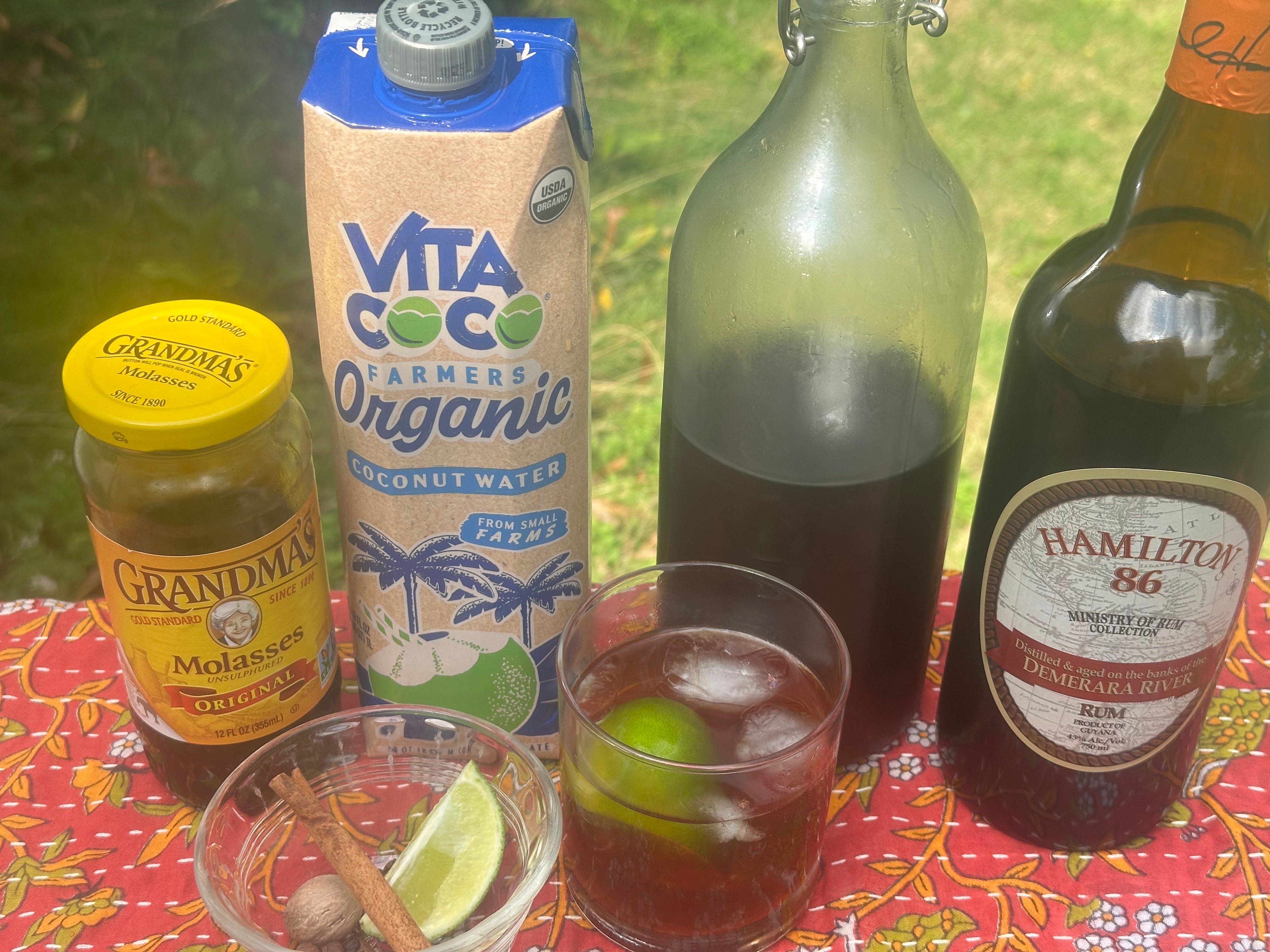
Hamilton 86 rum: This is a delicious, molasses-based rum from Guyana. I used it last week in my cocktail, and I’m using it again because it is my absolute favorite rum and I want more of it. Use the 151 strength rum if you dare, but splash in some extra coconut water if you do … and don’t stand close to any open flames.
Demerara Sugar: The basis for most of my rich simple syrups. A 2:1 ratio for any cocktail syrup is ideal; it’ll keep for months in the fridge at that concentration.
Coconut Water: I haven’t used coconut water as the liquid base for a syrup to date, and I’m intrigued by the result. The molasses and spice components of the syrup overrun most of the coconut flavor, but I still get a rich mouth feel and a hint of coconut from the finished product. I wouldn’t be averse to adding more coconut water to the final drink.
Molasses: Greg uses a small amount of blackstrap molasses to make the demerara sugar more rustic, on the presumption that Colonial-era sugar was less refined than modern sugar. Sadly, Greg is completely wrong. Colonial sugar plantations produced white sugar for the open market, with brown sugar reserved for local consumption or fruit preserves. Nonetheless, I decided to tag along with Greg and make the bumboo his way, just for fun. The molasses is very strong in the drink; feel free to dial it back or omit it if you’d like.
Clove, Pepper, Allspice, and Nutmeg: These are all extremely popular colonial era spices. They’re also baking spices … or pumpkin pie spices, if you’d prefer. Use them in whatever ratio pleases you. This level of spice is very present in the cocktail, but not strong enough to beat the molasses back.
Lime juice: You don’t want to get scurvy, do you? Use fresh lime juice. Only the fresh stuff prevents scurvy.
BIG TIME NEWS! On WEDNESDAY, AUGUST 27, I’ll be behind the stick at Hemingway’s Underground, a new speakeasy opening right here in Medina, Ohio. I’ve gotten a look at the drink menu, and I am absolutely in love with what we’re serving. This place is going to be red-hot here in suburban Ohio. Come on out and share a drink with me!
OPEN THREAD!
Yesterday was my last day at the country club, and I can't begin to tell you how glad I am about it. Exhausting work for nasty people. Anyways, questions about the drink go here.
If you need a healing dose of prime snark can I recommend Postcards to That Asshole? The Estivating Hibernian is sending some wisdom to the White House. Click this: https://open.substack.com/pub/theestivatinghibernian/p/postcards-to-that-asshole-8?r=2knfuc&utm_campaign=post&utm_medium=web&showWelcomeOnShare=false
Read. Upvote. Share.