


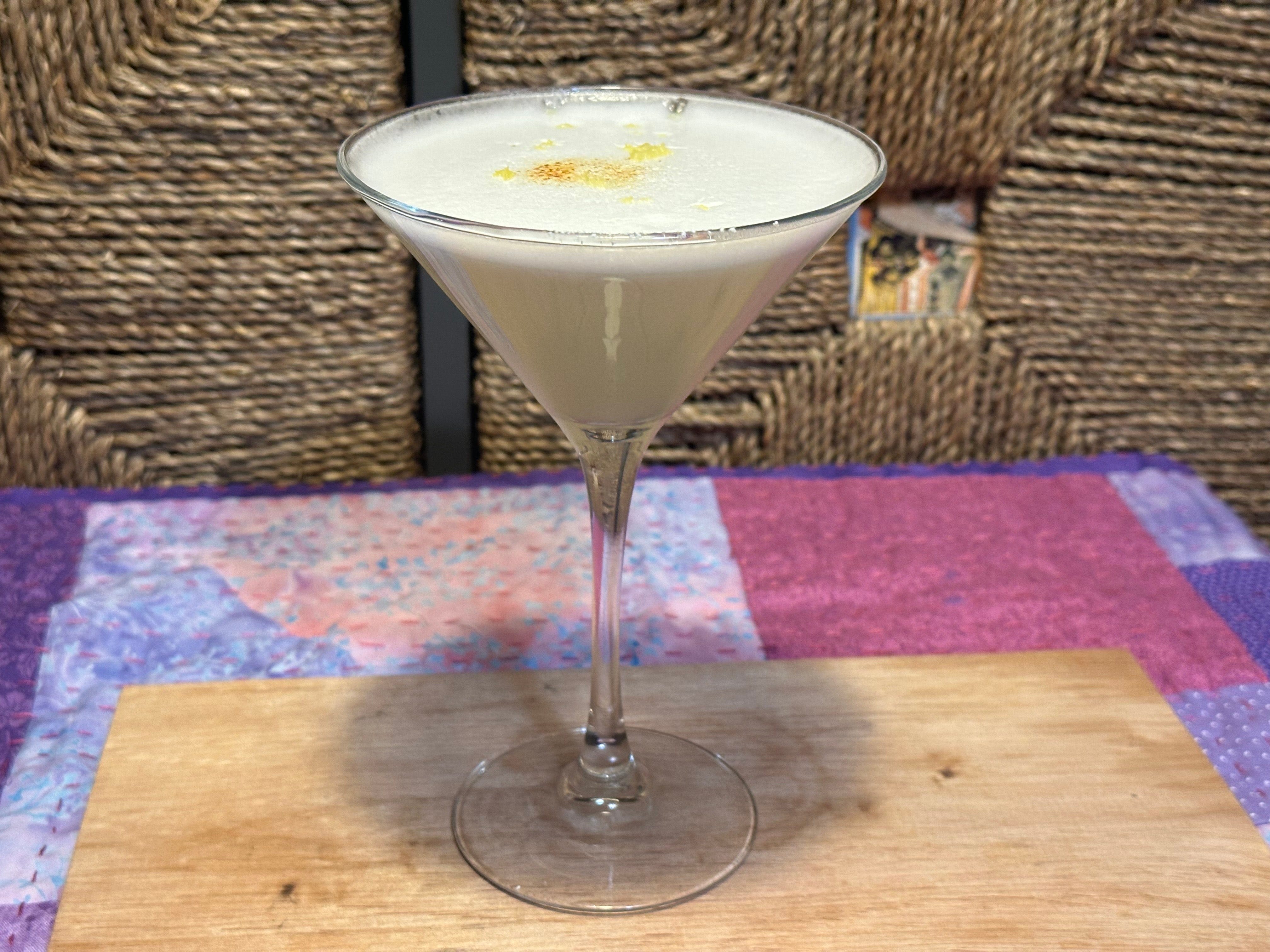
Greetings, Wonketeers! I’m Hooper, your bartender. Considering the state of affairs in America, I thought it might be time to offer a budget cocktail. I know a trick that will allow you to extract massive amounts of juice out of only one or two lemons. It’ll last longer in the fridge than regular juice, and it tastes better as well. Let’s shake up an elegant version of the classic lemon drop martini to taste-test some of our “super juice.” Fair warning: There will be math. Numbers first, drinks later. Time to make a Lemon Meringue Martini. Here are the recipes:
Lemon Super Juice
x grams lemon peels
x grams citric acid
16.65x grams water
Wash two lemons and dry them with a coarse towel. Peel the lemons and weigh the peels. (The weight of the peels is “x” in the recipe above.) Weigh out an equal amount of citric acid. Add peels and acid to a food processor. Weigh out the water (multiply the weight of the peels in grams by 16.65 to determine the water needed). Add just enough water to the food processor to cover the peels and puree for 1 minute. Add remaining water and puree 30 seconds. Let the mixture sit for 2 hours in the food processor. Add the juice of the peeled lemons to the mixture. Strain into a sealable container. Keeps 2-3 weeks.
Lemon Meringue Martini
2 oz Luskoya vodka
1 oz lemon super juice
1 oz simple syrup
1 egg white
1 t powdered sugar
Lemon zest
Add egg white, vodka, super juice, and syrup to a cocktail shaker. Do not add ice. Shake vigorously for at least 30 seconds. Add ice to the cocktail shaker. Shake the cocktail again with ice for an additional 30 seconds. Strain into a chilled martini glass. Place the finished cocktail in the freezer for 5 minutes. Gently sift powdered sugar over the cocktail. Flambe the foam until the powdered sugar toasts. Add lemon zest and serve.
If high school algebra is just a white haze of trauma in your memory, fear not. Kevin Kos published this super juice calculator to help you figure out exactly how much citric acid and water you need. Mr. Kos has been a proponent of super juice for some time, and after testing, I’m convinced he’s on to something. Super juice tastes slightly flat compared to fresh juice, but it tastes brighter in a mixed drink. As a fellow bartender put it, “Nobody orders a glass of lemon juice at my bar, so I consider this a win.”
It’s the shelf life and volume of the super juice that’s really shocking. Fresh citrus juice oxidizes within hours of being pressed. We are very careful about exposure to air at Hemingway’s, but the juice we bottle for service does go flat over time. Super juice loses none of its acidity or flavor over weeks in storage, and the sheer amount of juice produced by the process is astonishing. I’ve used this procedure to create lemon juice and lime juice; in both cases, I’ve multiplied the yield of juice from the fruit by a factor of eight. Four cups of juice from two lemons is a startling value.
The super juice process is very similar to the lemon sherbet we’ve made in the past for Lynchburg Lemonade. Lemon sherbet uses sugar to extract lemon oil from the peels of the fruit, a process that creates oleo saccharum (a key component of my limoncello). Super juice uses citric acid, the acid that naturally occurs in the fruit, to get the same result. Adding water to the acid and lemon oil yields a quality of “juice” comparable to what we normally squeeze from lemons. We’re using every last scrap of the fruit to make our juice, rather than throwing away the oil-rich peels. This is not only a thrifty process, but also a sustainable one. If I can save the environment and save some money in the process, it’s a win/ win.
Let’s make a drink to celebrate saving the earth and talk ingredients while we’re at it:
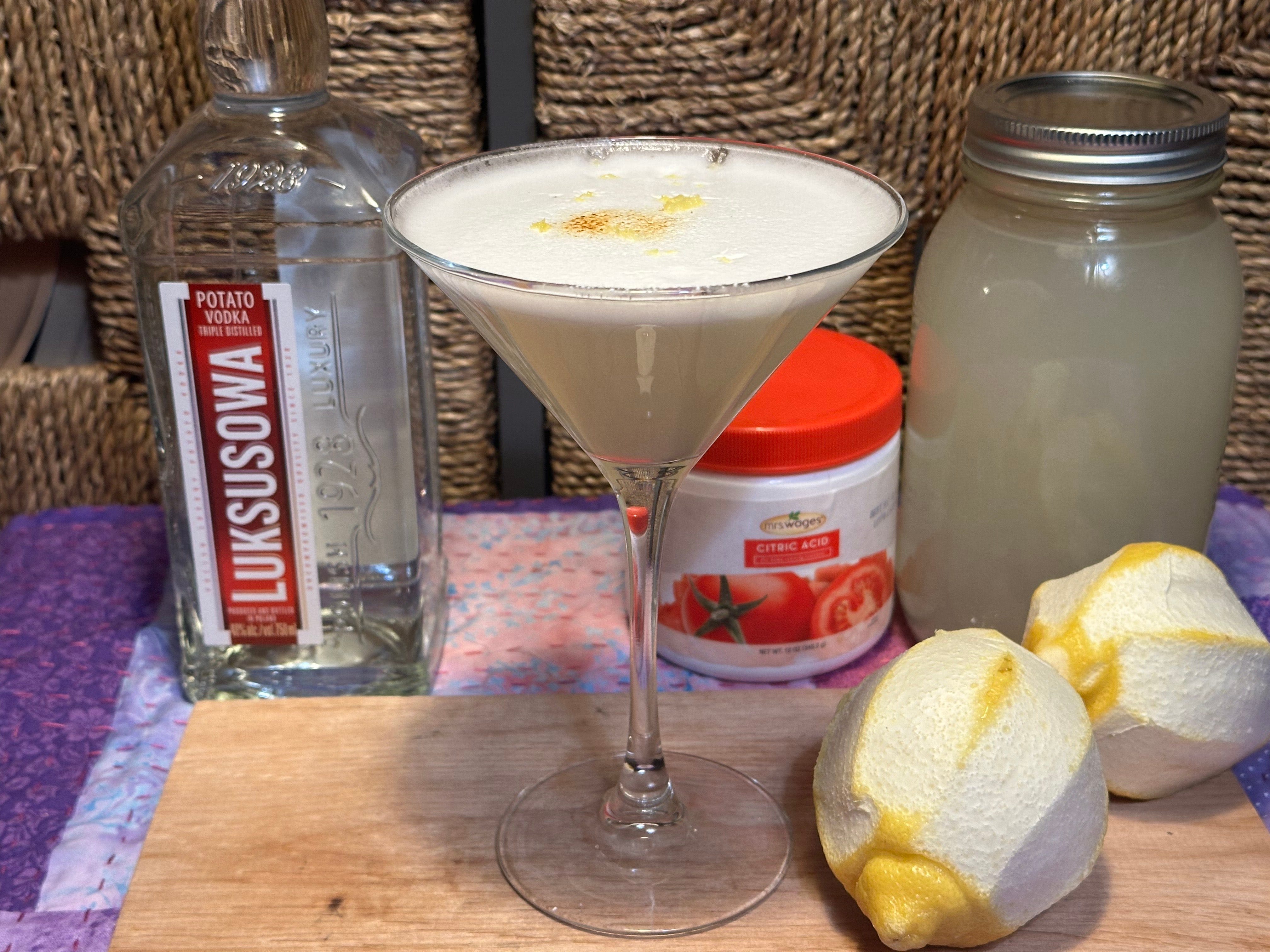
Luskoya Vodka: Luskoya is the rail vodka at Hemingway’s; it’s an earthy Polish potato vodka that’s easy to balance with citrus and syrup. Use your favorite brand. Tito’s is fine.
Super Juice: In the interests of science, you could make two of these cocktails, one with fresh juice and one with superjuice, and see if you can taste the difference. But I doubt that you can; I certainly can’t.
Simple Syrup: 2:1 sugar to water, heated until the sugar is dissolved and the syrup is clear. Tilt this cocktail a little sweeter than usual to play into the “meringue” aspect of it.
Egg White: The technique I described for shaking an egg white cocktail is called a dry shake. If you need a more detailed explanation, here it is. When doing a dry shake, I put all of my cocktail ingredients in the small tin of a two-part shaker and crack the egg over the large tin. If I screw up and get some yolk into the large tin, I can dump it out without having to remake the entire cocktail.
Powdered Sugar: I wanted to crisp the top of the egg whites on this cocktail just a touch, to lean into the “meringue” theme of the drink. Egg whites on their own are hard to crisp in a cocktail, but a dusting of powdered sugar provides fuel that the kitchen torch can toast properly.
My home bar is Hemingway’s Underground, the hottest cocktail bar in pretty little Medina, Ohio. I’m behind the stick Wednesday-Saturday, 4-10. Last call’s at midnight. Swing on by and I’ll make a drink for you … or anything else from our little Happy Hour here at Wonkette.
OPEN THREAD!
Busy questions here.
A few people have mentioned that my new chair is now actually Harry's new chair. But I am stubborn and will keep up the good fight for as long as possible. I am hoping for it being mine for the weekend. But I am dreamer.
https://substack.com/@ziggywiggy/note/c-174766984?utm_source=notes-share-action&r=2knfuc