


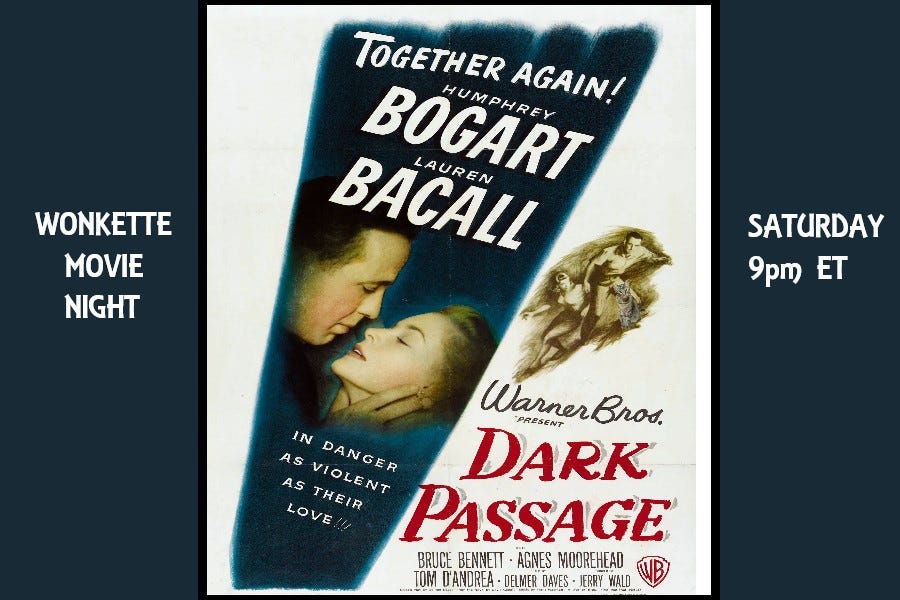
Dark Passage starts from the point of view of a man who has just escaped prison. This first-person POV allows you to feel empathy for the character; it also transfers his distrust and his desperation as he encounters different people and worries about being caught onto the viewer, pulling you into the film.
Vincent Parry was convicted of murdering his wife but he claims to be an innocent man. As he tries to hide from the police and people who may recognize him, he meets a woman who believes in his innocence. She brings him to her apartment where he discovers why this woman of affluence would risk everything to help him.
She believed her own father had been wrongly convicted of murdering her stepmother. She also believed the same thing had happened to Vincent and closely followed his trial. He wants to find the real killer of his wife and she wants to help him. But something is stopping him — his very recognizable face.
A sketchy plastic surgery says he can help, for $200 Vincent is going to look like a new man. Healing from the surgery with a bandaged face and unable to speak he spends his time with Irene who cares for him and protects him while he heals. Soon the puzzle pieces start to fall into place.
Vincent begins to understand who the real killer is while people continue to die around him. And Vincent and Irene’s time together turns into love. Can Vincent prove he is not guilty while still protecting the woman he has fallen for?
Who wouldn’t fall in love with this woman?
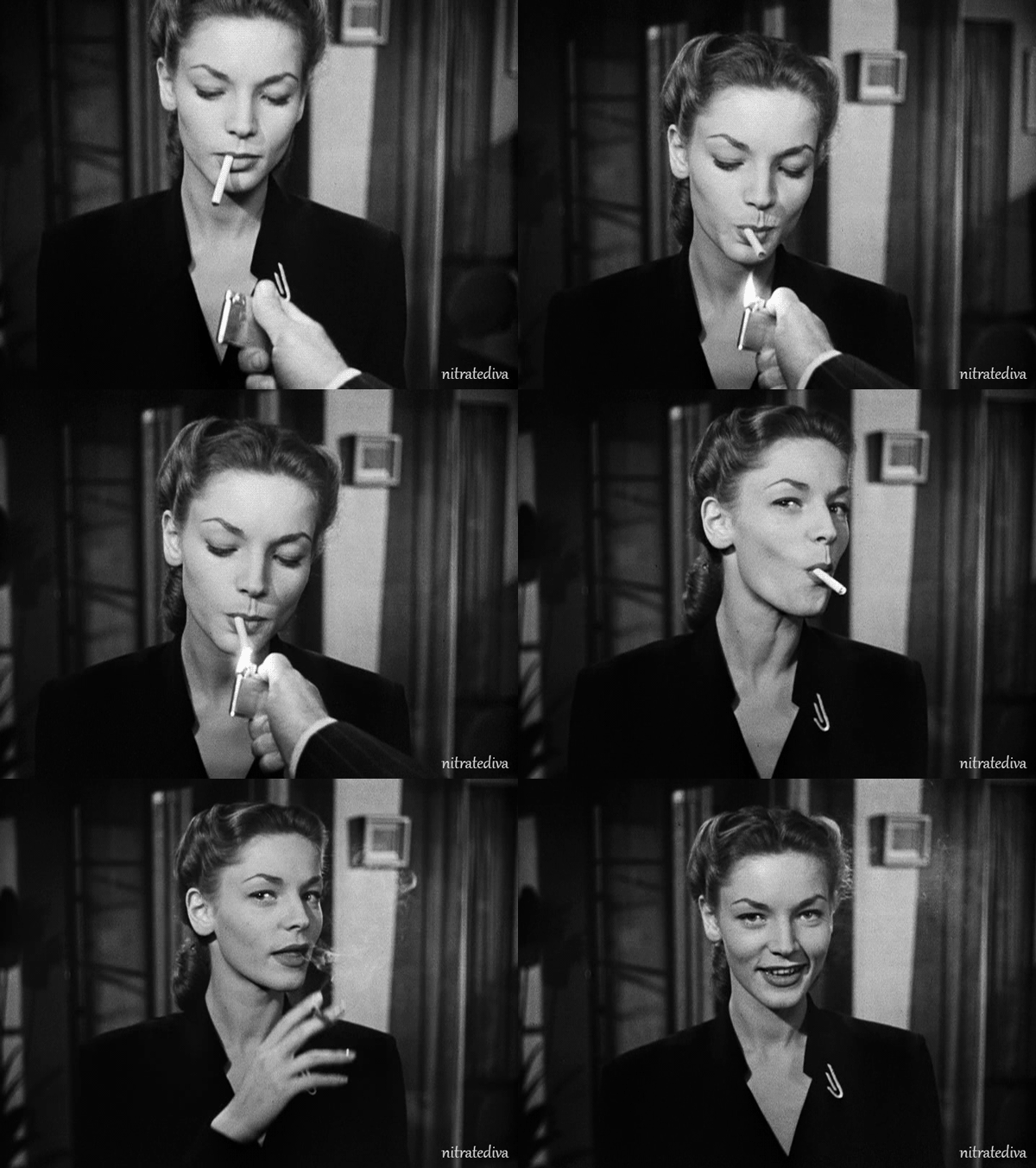
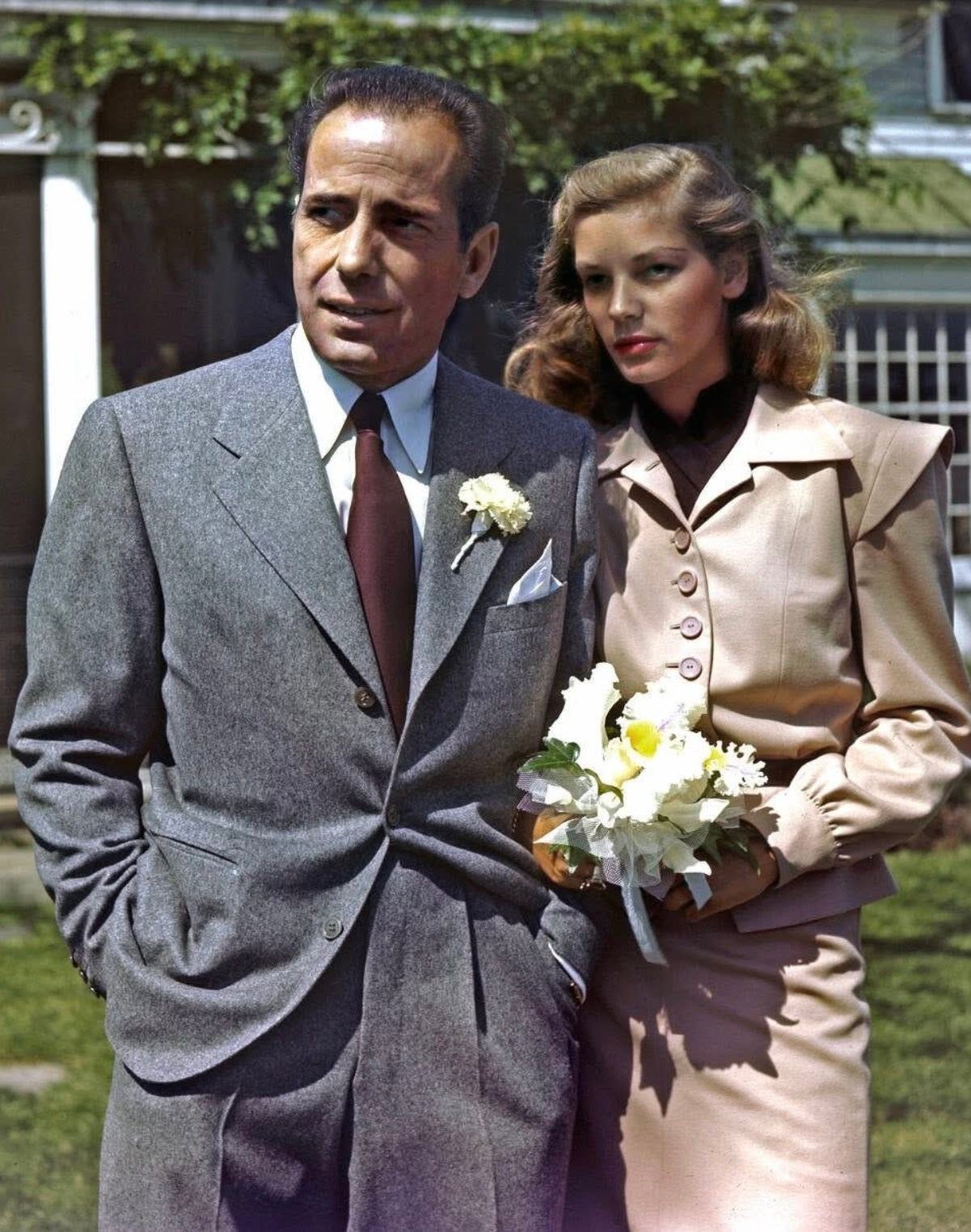
In real life they did fall in love.
Bogart and Bacall were married at the Malabar Farm in Ohio, home to his friend the writer Louis Bromfield, in 1945. Bacall was 19 and Bogart was 44; they had two children and remained married till his death in 1957. They made four films together, To Have And Have Not (1944), The Big Sleep (1946), Dark Passage (1947), and Key Largo (1948).
You can find photos from the original San Francisco filming locations used in Dark Passage here.
Dark Passage stars Humphrey Bogart, Lauren Bacall, Agnes Moorehead, Bruce Bennett, Clifton Young, Douglas Kennedy, Rory Mallinson, Tom D’Andrea, and Houseley Stevenson. Directed by Delmer Daves.
Dark Passage is available for free with ads on Tubi and Plex; $3.99 in the usual places. Free on OKRU.
To make requests and see the movie lists and schedules, go to WonkMovie.
The animated short is Black and White by Jesús Pérez and Gerd Gockell.
Next week’s movie night selection is Arsenic And Old Lace, available for free on the Internet Archive. $5.99 in the usual places. A colorized version is available for free on Alugha.
The button below will take any amount of your choosing at PayPal or we have a Patreon too.
𝐁𝐎𝐍𝐔𝐒 𝐓𝐑𝐈𝐕𝐈𝐀:
Their emotional bond was strong from the start; their difference in age and acting-experience encouraged a mentor-student dynamic. In contrast to the Hollywood norm, their affair was Bogart's first with a leading lady. His early meetings with Bacall were discreet and brief, their separations bridged by love letters. The relationship made it easier for Bacall to make her first film, and Bogart did his best to put her at ease with jokes and quiet coaching. He encouraged her to steal scenes; Howard Hawks also did his best to highlight her role, and found Bogart easy to direct.
However, Hawks began to disapprove of the relationship. He considered himself Bacall's protector and mentor, and Bogart was usurping that role. Not usually drawn to his starlets, the married director also fell for Bacall; he told her that she meant nothing to Bogart and threatened to send her to the poverty-row studio Monogram Pictures. Bogart calmed her down, and then went after Hawks; Jack Warner settled the dispute, and filming resumed. Hawks said about Bacall, "Bogie fell in love with the character she played, so she had to keep playing it the rest of her life." However, Bacall wrote in her memoir about the love she and Bogart shared, "No one has ever written a romance better than we lived it." and she said regarding Bogart's personality, "He was a very gentle soul. He was very strong, and very sure about what he believed in and what he thought was important and not important. He couldn't be pushed around. But he was a gentle man. I was very, very lucky to have even met him, much less have been married to him. He had extraordinary gifts. He was much more of a complete individual than most people are. He had the kind of standards my mother had. Their values were very much the same. It was very interesting. He had tremendous character and a great sense of honor and would not tolerate lies, even if they asked him what he thought of a movie."
𝐁𝐎𝐍𝐔𝐒 𝐓𝐑𝐈𝐕𝐈𝐀:
Warner Brothers studio head Jack L. Warner was not pleased to discover that the face of one of his biggest stars, Humphrey Bogart, is not seen for the first half of the movie. By the time Warner knew this, the film was too far along to be changed.
Humphrey Bogart's complete uncovered face is not seen clearly until 62 minutes into the movie, when his character finally removes his bandages and looks into a mirror. All previous scenes with the character are either shown from his point of view or have his face obscured with shadows or bandages.