


We were musing to ourselves over the long weekend about the dismissal of the Broadview Six case and the fact that at least some federal courts have been holding the line against both the Trump regime’s imaginative reinterpretation of centuries of American law and the Supreme Court’s new judicial doctrine of inveniendi cacas that it has leaned on to give Trump almost anything he wants. And lo and behold, on Tuesday morning we woke up to a new example of a lower court telling Trump and SCOTUS to shove it someplace normally not reserved for the shoving of things.
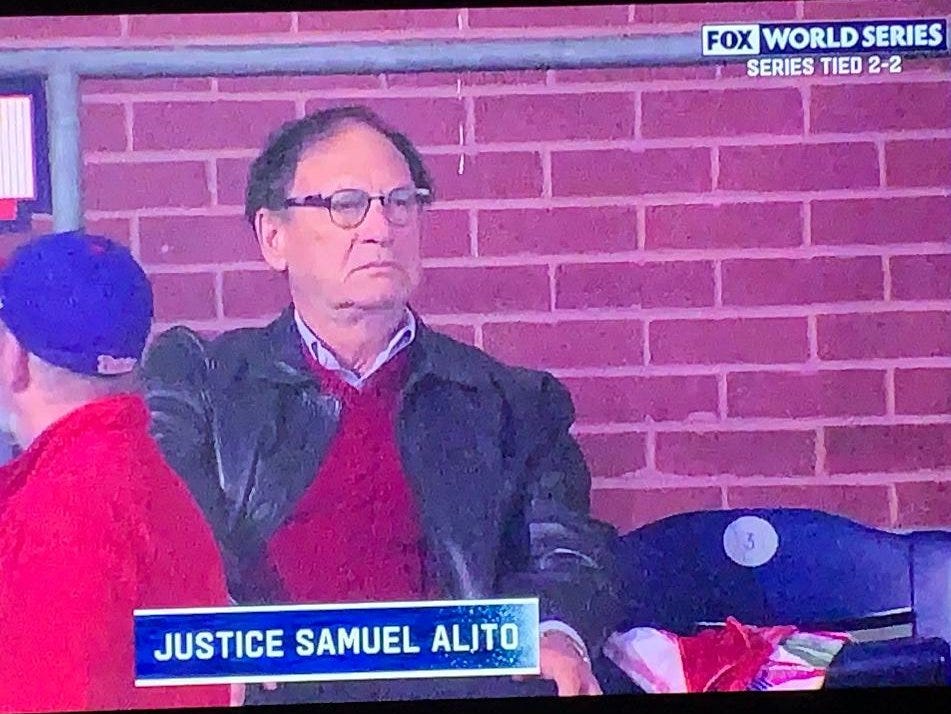
The lower court was more polite in its phrasing, because it is not a profane mommy blog that will profanely tell Sam Alito to fuck all the way off.
A mere two weeks ago, we wrote about SCOTUS using its own terrible voting rights decision in Callais v. Louisiana as an excuse to order a lower court to reconsider Allen v. Milligan. This was the redistricting case in Alabama where the Republican-controlled Legislature wanted to redraw its congressional maps to eliminate one of two Black-majority voting districts. The Northern District Court of Alabama had ruled against the state, deeming the map it wanted to use as racially discriminatory.
Alabama appealed to SCOTUS, which (shockingly given its neo-Confederate bent and its interest in rolling back most 20th century jurisprudence) affirmed the lower court’s decision. Then two weeks ago, SCOTUS reversed itself for no real reason and told the district court to reconsider the Alabama map it had struck down, this time with the decision in Callais in mind.
The district court did so, and Tuesday the three-judge panel that ruled against the state initially (and which included two Trump appointees) released a 102-page ruling saying, Nah, we’re good:
Ultimately, we cannot see our way clear to requiring Alabamians to cast their votes in the 2026 elections under a districting plan tainted by intentional race-based discrimination. And under the unusual circumstances of this case, we conclude that a limited order requiring the Secretary to continue using this Court’s race-blind map will not disrupt Alabama’s elections.
That last part is important. As we noted, changing the maps now would be a violation of SCOTUS’s own Purcell Principle, which says that courts should not intervene with major changes to voting maps close to elections. And at the time SCOTUS remanded the Alabama case, early voting for the state’s primary election was a week away from starting. So this is the district court basically telling SCOTUS, Hey, we’re just doing what you guys told us we’re supposed to do.
More importantly, SCOTUS had been very explicit that the decision in Callais had no bearing whatsoever on Allen, as the two cases addressed two different issues. We once again quote Sonia Sotomayor’s dissent from two weeks ago:
Nothing in the District Court’s Fourteenth Amendment analysis is affected by this Court’s opinion in Callais. Most obviously, Callais changed the legal standard for vote-dilution claims under §2. See 608 U. S., at ___ (slip op., at 19) (“[W]e must understand exactly what §2 of the Voting Rights Act demands”). It said not a word about the standard for Fourteenth Amendment intentional-discrimination claims like the one that the District Court decided on remand in round two.
Which was what made SCOTUS’s reversal two weeks ago so maddening. What was the point? Did the justices not believe their own conclusion that the issue in Callais had nothing to do with the issue in Allen? Do Alito and John Roberts so loathe majority-minority voting districts that they cannot stand for even one to continue existing for one damn election if there is even the tiniest chance it can get drawn out of existence and replaced with yet another district for white people?
The entire remand seemed like a Hail Mary born of spite and bile and bigotry. Which fits with this SCOTUS.
In the meantime, the district court had to use up time and resources to write over 100 pages explaining that it was right the first time and would not be changing its mind.

Naturally, Alabama wasted no time in announcing it will appeal Tuesday’s ruling to the Supreme Court. Could SCOTUS stay the district court ruling, which would also mean effectively reversing itself and letting Alabama use its racist map, until it can decide if the Northern District is correct that Callais should have no effect on this case?
Two weeks ago, we wrote we were hoping the district court would do something like this simply because it would annoy the hell out of Alito and Neil Gorsuch. We didn’t think the court actually would, though.
This was not the only good redistricting news coming out of the South on Tuesday. In South Carolina, the Legislature decided against voting on a new map that would have eliminated the state’s only Black-majority district and pushed its longtime representative Jim Clyburn into retirement. This means redistricting is dead in South Carolina for the moment.
This is gobsmacking. South Carolina, where the Civil War kicked off? South Carolina does not want to join all these other Southern states in rushing to redraw all their congressional maps to eliminate Black representation and prove why the Voting Rights Act the Supreme Court just killed was necessary in the first place?
If we would have bet on any state jumping at the chance to redraw its congressional map to be more racist, it would have been ... well, it would have been all of them, so never mind.

But South Carolina has been surprisingly resistant to the idea of changing its maps. Not changing them means defying the wishes of the greatest president in American history, Donald Trump, who has been pressuring the state to make the move. A White House adviser even called the decision a “betrayal,” although these people are so overly dramatic, they think Hee-Haw getting cancelled was a betrayal.
Why isn’t South Carolina moving ahead? The reason shocked us:
[A]fter early voting began Tuesday for the previously scheduled June 9 primary, some Republicans in the state Senate changed their tune, arguing it was too late to enact new district lines.
The South Carolina Legislature is abiding by the Purcell Principle that SCOTUS just blatantly ignored in Louisiana and tried to ignore in Alabama. Wild. Satan must be stocking up on winter coats.
Wonkette stays alive thanks to the generous support of our readers. And hey, we also have a Patreon!
"When I paid $200 for 3 bags of groceries today, I thought to myself, “I’m sure glad they’re having a UFC fight on the White House lawn”"
Which biker gang wears a sweater vest with a leather jacket, Hell's Accountants?