


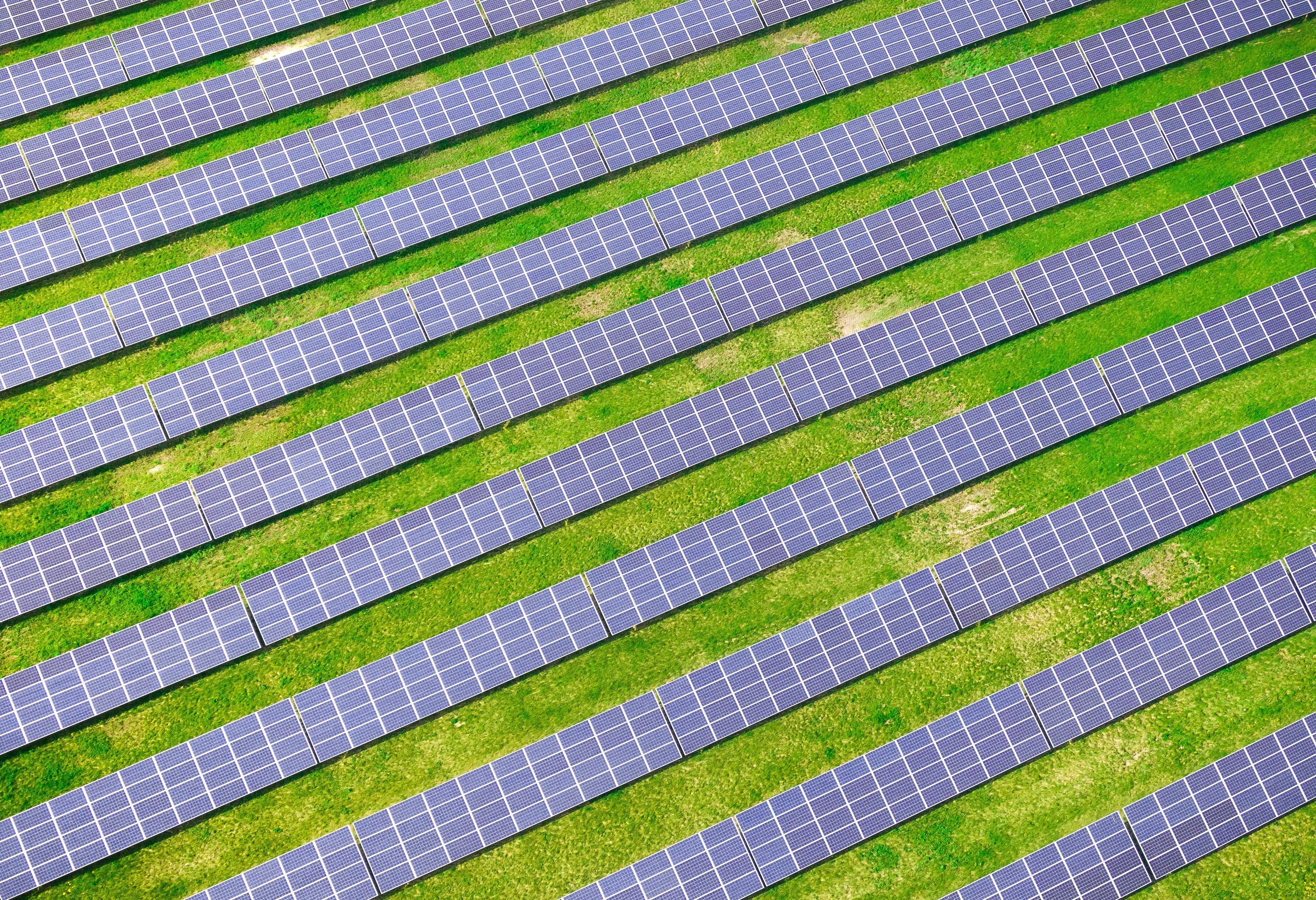
Donald Trump last week expanded his portfolio of bizarre claims about clean energy beyond his usual attacks on wind turbines, which he claims cause cancer and kill all the birds (no, that’s windows and cats). Now he’s making up lies about solar panels too, claiming in Texas Tuesday that they’re dangerously hot, which is observably not true. They turn sunlight into electricity, but they don’t heat up, that’s just crazy.
The guy whose innate understanding of science came from his uncle the MIT prof explained, “They have solar, some solar, not those big monsters that they put up all over, they kill all the animals. The animals jump on them and they fry. Because those black panels are hotter than your stove.”
As climate GOAT Bill McKibben pointed out on his blog, no.
This is not true, as anyone with a functioning brain should be able to easily figure out; there are of course tens of millions of homes and apartments with solar panels, and no reports of burns from touching them. Literally here is a video of a goat dancing on a solar panel. It turns out in fact there are dozens of these pictures online—goats on solar panels are an entire genre.
Here is Karen the goat dancing around on her owner’s solar panels, which is maybe a good ad for their durability, or maybe an argument for using sheep or other livestock to graze around solar panels, since they jump less. In any case, Karen is cute and decidedly not fried.
With that out of the way, this week we’re discuusing the introduction and first section of McKibben’s 2025 bestseller Here Comes the Sun: A Last Chance for the Climate and a Fresh Chance for Civilization (Wonkette affiliate link), in which McKibben makes the case that solar and wind energy, backed by battery storage, are now so affordable that we’d have to be crazy to keep powering our economy with fossil fuels, which release climate-warming greenhouse gases. It’s just good economic sense, and for the first time since scientists called attention to the threat of climate change in the 1980s, we have a very clear, sunlit path away from civilizational disaster.
But we have to act, and fast, because in the decades since 1988, when James Hansen gave his landmark testimony before Congress about the dangers of global warming, humans have increased the amount of carbon dioxide in the atmosphere by another 20 to 22 percent.
Sunlight To Beat Back These Dark Times
McKibben’s intro raises a theme he returns to several times, suggesting that building out clean energy to power the world’s economies won’t just lead us out of the climate crisis. Its distributed nature may also mean that “we’re also potentially on the edge of one of those rare and enormous transformations in human history” akin to the economic and social change wrought by the Industrial Revolution.
But where limited fossil resources consolidated power in the hands of those who control oil, coal, and gas, abundant clean energy just might level the field. For instance, in developing countries, cheap, local solar or wind microgrids mean villagers can power their own shops, small factories, and homes without a monthly payment to a monopoly utility company. The sun shines on everyone.
This is one of those books that had me saying “wow” a lot as I read it. I like when books do that.
You can also use the button below to donate an amount of your choice with Paypal or Venmo, or we have a Patreon too.
While it’s all sunshine, Here Comes the Sun isn’t necessarily all roses, what with the climate damage that we’ve already locked in, and the powerful economic and political interests resisting the energy transition at every step. McKibben tempers his optimism with sobering reminders that “Our best hope now is simply to stop the heating of the earth short of the point where it cuts civilization off at the knees, and even that will be a very close call.” We have to make this work, and time is running out.
McKibben’s optimism is not simple techno-utopianism. It’s more of a roll-up-our-sleeves and get to work fight song. I’m reminded of Saint Molly Ivins’s advice that fighting for freedom and justice is hard work, exhausting even — but solidarity in that fight has payoffs beyond whatever good you may do in the world: “And when you get through kickin' ass and celebratin' the sheer joy of a good fight, be sure to tell those who come after how much fun it was.”
We’re in a fight for survival. And as civil and labor rights leader Dolores Huerta spent her life reminding us, “Sí, se puede!” — “Yes, it can be done” / “Yes we can.”
Chapter 1: That Burning Sensation
This first section of Here Comes the Sun is your “necessary groundwork” introduction to the basics of how we got into this climate mess, but thankfully, McKibben is such an engaging writer that it never feels like homework. Chapter 1 is our history of technology chapter, in which McKibben first looks at how burning things, especially fossil fuels, has been essential to the development of human civilization up to this point — and then at how the more recent and rapid development of solar and wind energy has brought us, right now, to the point where,
as a species, we could and should break the habit of burning things. We could and should extinguish the fires in our power plants and factories, beneath the hoods of our cars, in our basements and kitchens, replacing those blazes with the fire of the sun.
At the risk of sounding like a third-grader’s book report, I really like how McKibben juggles all the history and science facts in these early chapters, always keeping the goal — here’s why we gotta transition away from burning stuff — connected to the facts.
I initially breezed through this first chapter, and am only noticing now how much information McKibben crammed into it: The history of fossil fuels and of photovoltaic cells and wind turbines; an overview of the devices that will make use of all that clean electricity (heat pumps, electric vehicles, and home devices); a history of the fossil fuel industry, its grip on the economy and its resistance to change; and crucially, an explanation of why the economics of clean energy make the transition away from fossil energy not just feasible, but nigh inevitable in the long run — which in our case we have not got. (Feel free to diagram that sentence.)
My big “wow” moments in this chapter came largely from that last argument, much of which I was already familiar with but still find newly neato: Clean energy is so efficient that it’s just plain stupid to keep burning fossil fuels, which have to be taken out of the ground, processed, and moved — via pipeline, rail, ships, and/or trucks, all running on fossil fuel too — to all the places that need them. A whopping 11 percent of all fossil energy produced is expended just sustaining that supply chain.
The sun shines and the wind blows almost everywhere, once you’ve constructed the panels or turbines to turn them into electricity, the equipment never needs refueling, just regular maintenance. You also need to store and release that energy when the sun don’t shine and the wind don’t blow, so batteries. The only thing you have to store or “transport” is electrons, via the power grid, which will need upgrades to handle electricity coming from all those distributed resources. There too, we know how to do it, although the permitting process needs revamping, and weedsy issues with utilities’ business models must be resolved.
Favorite line in this chapter: While noting that nuclear power scares him less than it once did (but also that it remains too expensive to deploy as widely as renewables), McKibben explains that the risk of keeping existing nuke plants operating is relative: “It takes something going wrong to produce a nuclear disaster; whereas a gas-fired power plant operating precisely to spec destroys the earth.”
Wow.
Chapter 2: It’s Gettin’ Hot In Herre, So Take Off All Your Coals
This relatively brief chapter reminds us that the climate crisis is very much here and now, and it will only get worse the longer we keep burning fossil fuels. It’s a chance for McKibben to slap complacent gradualism across the face and point at the approaching flames. He chooses as his deserving slappee the “practical” claims made by annoying centrist Matt Yglesias.
As McKibben concedes, Yglesias is a talented writer, and therefore dangerous. Yglesias has argued that clean energy proponents, particularly Joe Biden, should drop talk of climate as an “existential” crisis, in part because of the very factors McKibben has already covered. Yglesias handwaves that “future industrial development is on track to be cleaner than past industrial development, even without any new policy changes or technological breakthroughs,” so let’s do that without talking about disaster, which will only create backlash. McKibben has little patience for that claim, because as he says, we have already reached “the ‘finding out’ part of the exercise.” We don’t have the luxury of time, and fossil fools will squawk no matter what.
McKibben also explains why, despite the understandable lefty appeal of bumper stickers saying “Live simply so others can simply live,” we won’t solve climate change through degrowth, wiping out consumerism, getting rid of capitalism, or other laudable hopes for changing society in ways that eliminate our appetite for energy:
The reason this rendering of the argument worries me is that it’s so sane. We manifestly don’t need larger cars, and over a longer time frame (and aided, again, by the switch to local, smaller-scale sources of energy) I think we’ll come to realize that. But I don’t think there’s any chance of it happening in the few years relevant to the outcome of the climate crisis: Remember, the world’s climate scientists have told us we need to cut emissions in half by 2030, and people simply do not change their desires that fast.
Even though meeting that goal is unlikely, every tenth of a degree of warming we prevent is crucial.
McKibben closes this “we can’t delay, MATT” chapter with some good news, which is that climate scientists have mostly reached a consensus that once we stop adding greenhouse gases to the atmosphere, planetary warming will stop increasing. But he adds, in my favorite line from this chapter, “That’s not euphoric news—we’d still inhabit an overheated earth. But no one goes to the ER expecting euphoria. What we hope for is a chance.”
Again, tough-minded, almost grim optimism. The rest of the book is about how we can make the most of that chance.
Now let’s talk about Here Comes the Sun so far. What surprised you in this first section? What made you say wow? What lines made you think? I’ll drop a few other questions in the comments, and you can do that too!
As always, remember that if you're behind on the reading, or haven't read the book at all, no problem, we're not grading any of this. Jump in and talk! If you can, please try to keep the discussion on the topic of the book, and hold your Open Thread comments for the Nice Times column that’s on the way.
Our next reading schedule:
Sunday, November 8: Section Two, “There’s No Reason Not To Do This.”
Sunday, November 15: Section Three, “Let’s Do This!”
??? (Probably also November 15 would make sense; we’ll see): Video Book Chat meeting to wrap up. It’ll be our first Dok Zoom Zoom! Thornton will probably block my webcam! BYO sunshine.


[The Crucial Years / Here Comes the Sun (Wonkette affiliate link) / Volts / Power]
Yr Wonkette is funded entirely by reader donations. If you can, please become a paid subscriber, or if you’d like to make a one-time (or recurring) donation, you can click this here button.
Did anyone else catch the little error in Chapter 1, where McKibben said that Trump pressured Asian countries to "export" more compressed natural gas in order to get sanctions relief? Obviously, shoulda been "import" — but more to the point, what a bastard.
Hey kids, we're live! Book chat time, and a reminder to please focus on talking about the book or about climate and clean energy. News of your cats and other open-thread conternt is of course cherished and should be posted in the Cakes We Like thread, or in the Nice Times post coming later.