


Two days after the Trump administration gave us yet another demonstration that it cannot be trusted to run anything like adults would, we’re finishing up our discussion of Bill McKibben’s 2025 book Here Comes the Sun (Wonkette affiliate link), which argues that rapidly transitioning to clean energy is both a smart economic choice and of course the only way to bring global warming under control. What’s more, widespread adoption of decentralized solar and wind energy, backed up with batteries, can move the world in a better direction.
For today we read the book’s final three chapters, in a section cheerfully urging “Let’s Do This!” McKibben’s first section laid out the case for why a rapid transition to clean energy is necessary for keeping Earth habitable for large mammals like you, me, whales, and Senator-elect Scott Colom (D-Mississippi) and also just the smartest economic and practical choice, even if you never say the words “climate change.” His second section puts to rest a lot of mis- and disinformation that fossil fools have spread to make clean energy seem like a bad idea, when continuing to rely on fossil energy is the worst idea possible in a heating world. In his closing chapters, McKibben wants to get us charged up, ready to go, so we can get to work and make it happen, now.
Works for me! Let’s make this happen. American voters helped us take a big step back from the abyss by electing a new Democratic majority in Congress. The new members of Congress need to know that we want a planet our children and grandchildren can keep living on.
You can also use the button below to donate an amount of your choice at Paypal, or we have a Patreon too.
McKibben mostly wants to remind us that activism works, that it’s the only way those of us who can’t buy our own member of Congress can bring change. He’s basically doing the very same thing in this section as Rachel Maddow has been doing in every single “A” block of her show during the second Trump era/!error: pointing out that the power we need in order to fight this monstrous regime is each other, together, loudly.
It does help to have some organizational skills and to know where to apply pressure, so we aren’t just going to a rally and not doing anything else, so McKibben has some very solid recommendations for finding others to join with. His own group, Third Act, seeks to get people over 55 showing up at public utility hearings, which often tend only to draw industry lobbyists.
[We’ve] discovered that retirees are great at this work—willing to bring the crossword puzzle or crochet basket into hearings, willing to do the work in the trenches. […]
And when it works, it’s intensely satisfying. After endless hearings, the Massachusetts legislature ended 2024 by passing crucial siting and permitting reform laws that will make it easier to build new community solar farms[.]
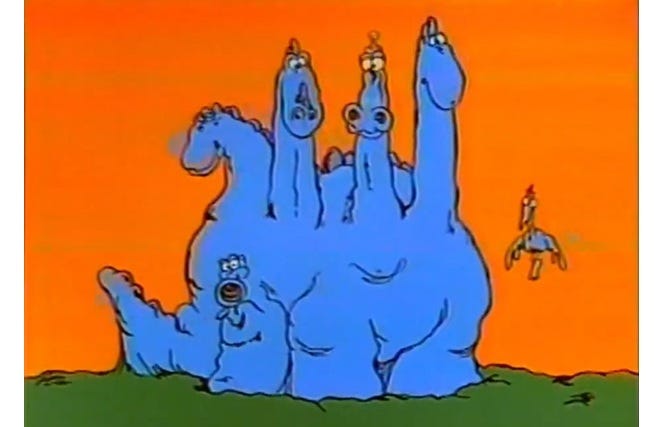
In Chapter 9, “A Subtly New World,” McKibben dives more deeply into the theme that he’s built throughout the book, explaining the potentially liberating implications of clean energy. Fossil fuels are scarce resources found only in some places that millions of years ago were swamps and forests (but sorry, all of us miseducated by old Chevron ads, oil isn’t made of the dinosaurs who lived there).
That scarcity means fossil resources can be controlled by a few massive companies (and national governments), and that isn’t great for human thriving. Think of America in the Gilded Age, or of the people living in the most corrupt petrostates today. It’s hardly a coincidence that Donald Trump invaded Venezuela to “take the oil.”
It don’t have to be that way, says McKibben:
Whereas, again as I’ve said before, sun and wind are by definition universal (and the places with the least sun often have the most wind). Instead of being concentrated they are diffuse—sunlight falls everywhere, and while some places are sunnier than others there is enough everywhere to get the job done. That’s why Germany and the Netherlands vie with Australia for the most solar PV per capita, and why Massachusetts trails just Hawaii in the same category.
Distributed power. Far out! We were also impressed by the example of the Ukrainian energy developer who notes that if a Russian attack wrecks parts of a solar array, the remaining panels can be connected and provide power while the others are replaced, in about a week, far faster than repairing a coal or gas power plant.
McKibben closes Here Comes the Sun on a somewhat more spiritual note, discussing the deep human connections to our star and its power, and darned if he didn’t get even this old atheist feeling a little inspired, remembering Carl Sagan’s wonder at the fact that we’re all made of star stuff, bound to each other in molecular common roots. I set down my tablet feeling a little awestruck, and damn it, more than a little hopeful.
And now, let’s talk about it in the comments!
What ideas or details in these closing chapters made you say “wow”? What details will you be talking to friends about? What inspired you, or left you wanting to know more? I’ll drop a few other questions in the comments, and you can do that too!
As always, remember that if you’re behind on the reading, or haven’t read the book at all, no problem, we’re not grading any of this. Jump in and talk! If you can, please try to keep the discussion on the topic of the book, and hold your Open Thread comments for the Nice Times column that’s on the way.
Also, about an hour after this post goes up, we’ll start our video book chat via Google Meet, starting at Noon EST. See the end of the post for login details.
And here’s our big announcement: Starting now, we’ll be doing Wonkette Book Club every month, and instead of dragging the discussion out over multiple parts like we have in previous outings, we’ll read the book and then after a few weeks, we’ll discuss it in a single post.
Rebecca thought it would be fun to start out with something less weighty than climate change; she suggested we try one of the romance-thriller novels Stacey Abrams wrote (under the pen name “Selena Montgomery,” before she started all the diligent work that made it possible for Georgia to turn bright blue. So that’s what we’ll do! Start cranking up your search engines and interlibrary loans, and we will read her penultimate novel Reckless (affiliate link), which sounds steamy and suspenseful. How about we plan on discussing it on Sunday, December 13, which is comfortably in between Fight With Your Relatives Day and the Sacred Baby Festival?
Links to all parts so far:


[Here Comes the Sun (Wonkette affiliate link) / Reckless, by Stacy Abrams (as Selena Montgomery)
Yr Wonkette is funded entirely by reader donations. If you can, please become a paid subscriber, or if you’d like to make a one-time (or recurring) donation, you can click this here button.
Video Meeting information:
We’ll be using Google Meet to talk about the book, starting at noon Eastern (that’s 11 a.m. Central, 10:00 “Mountain Time” and 9 a.m. Pacific.
I will post the URL and login information about 10 minutes before that. Will be wild!
Hey kids, we're back with Book Club talk in the comments, and a reminder to please focus on talking about the book or about climate and clean energy. News of your cats, annoying neighbors (god they're so annoying!) and other open-thread content is of course cherished and should be posted in the Nice Times post coming at 1:00 EST.
And yes, there will be instructions on how to join the video chat when it goes up at noon Eastern, 'bout an hour from now!
I'd actually forgotten that the old Chevron ad with the cartoon dinosaurs turning into oil was urging people to drive responsibly so dead dinos wouldn't be wasted. And man, wasn't that oboe music used in a million other ads?
https://youtu.be/4hRXNr4qtHs